In recent years, #FFP2 masks have become one of the most widely searched respiratory protection products worldwide. While they were once mainly associated with healthcare emergencies, today FFP2 respirators are commonly used in manufacturing, construction, laboratories, public transportation, and other high-exposure environments.
As workplace safety regulations continue to strengthen across Europe and international markets, more businesses and consumers are searching for certified respiratory protection solutions that combine filtration efficiency, comfort, and long-term reliability.
This article explains how FFP2 masks work, where they are used, and why they remain highly relevant in 2026.
What Is an FFP2 Respirator?
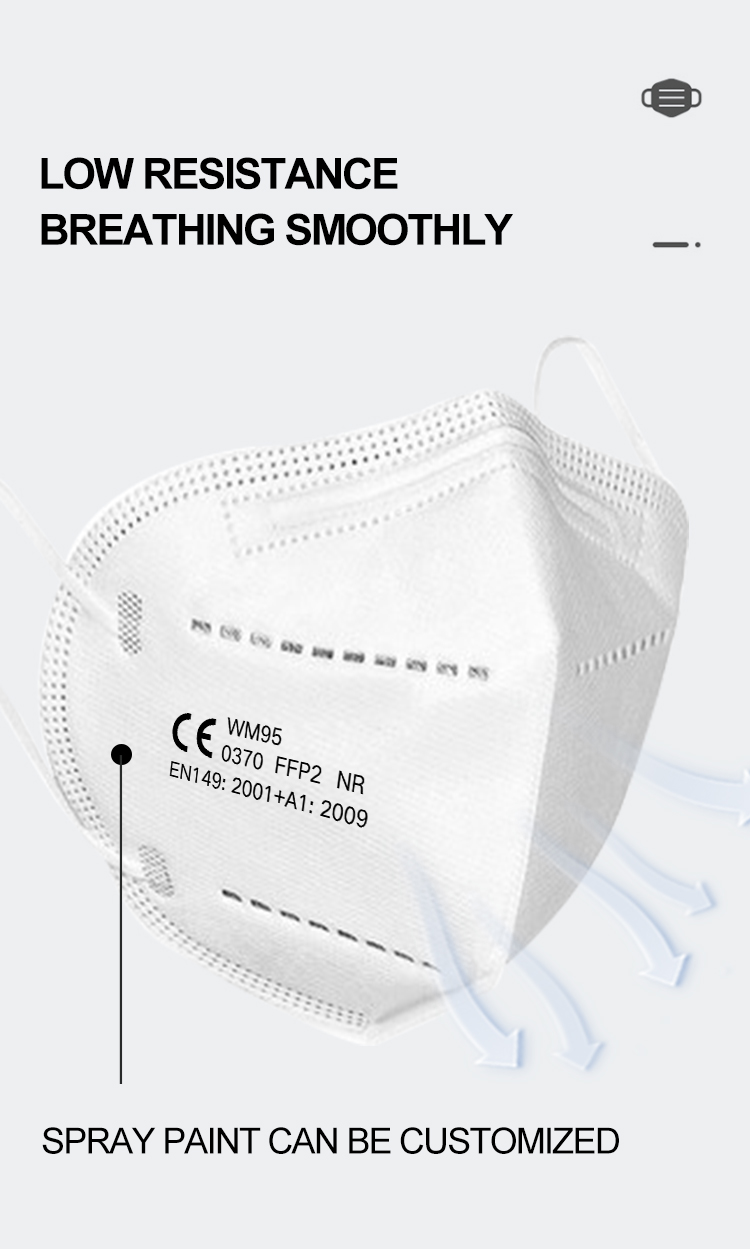
FFP2 is a European respiratory protection classification under the EN149 standard. The term “FFP” stands for “Filtering Face Piece,” which refers to disposable respirator masks designed to reduce inhalation of airborne particles.
There are three primary FFP protection levels:
| Type | Filtration Performance | Common Uses |
|---|---|---|
| FFP1 | Basic particle filtration | Light dust environments |
| FFP2 | Medium-high filtration | Industrial and medical protection |
| FFP3 | Maximum filtration | High-risk industrial or medical settings |
An FFP2 mask is capable of filtering at least 94% of airborne particles under standard testing conditions. Because of this performance level, FFP2 respirators are widely used in situations involving dust, aerosols, smoke, and fine particles.
Why FFP2 Masks Continue to Grow in Demand
Even after the peak of global pandemic-related demand, the FFP2 market continues to expand due to several long-term industry trends.
Increasing Industrial Safety Requirements
Many industries now require higher respiratory protection standards for workers. Sectors including:
- 1.Construction
- 2.Mining
- 3.Pharmaceutical production
- 4.Battery manufacturing
- 5.Automotive painting
- 6.Chemical processing
all rely heavily on certified disposable respirators to reduce workplace exposure risks.
Growing Awareness of Air Quality
Air pollution and fine particulate exposure remain a major concern in many countries. More consumers are using FFP2 masks during:
- 1.Daily commuting
- 2.Public transportation
- 3.Wildfire seasons
- 4.Dust storms
- 5.Heavy pollution periods
This has expanded FFP2 demand beyond traditional industrial applications.
Expansion of Clean Manufacturing Industries
High-tech industries such as semiconductors, electronics, and cleanroom manufacturing increasingly require controlled environments and particle protection, driving additional demand for high-performance respirators.
Main Components of an FFP2 Mask
Most FFP2 masks are made using multiple layers of nonwoven materials. These layers work together to improve both filtration and comfort.
A typical FFP2 respirator may include:
- Protective outer spunbond layer
- High-efficiency melt-blown filtration layer
- Electrostatic particle capture layer
- Soft inner skin-contact layer
Among these materials, the melt-blown layer plays the most important role in capturing microscopic particles.
Modern manufacturers also focus on improving:
- 1.Breathability
- 2.Low breathing resistance
- 3.Long wearing comfort
- 4.Face seal performance
- 5.Moisture control
These improvements are especially important for workers who wear respirators for extended periods.
FFP2 vs N95 vs KN95: What’s the Difference?
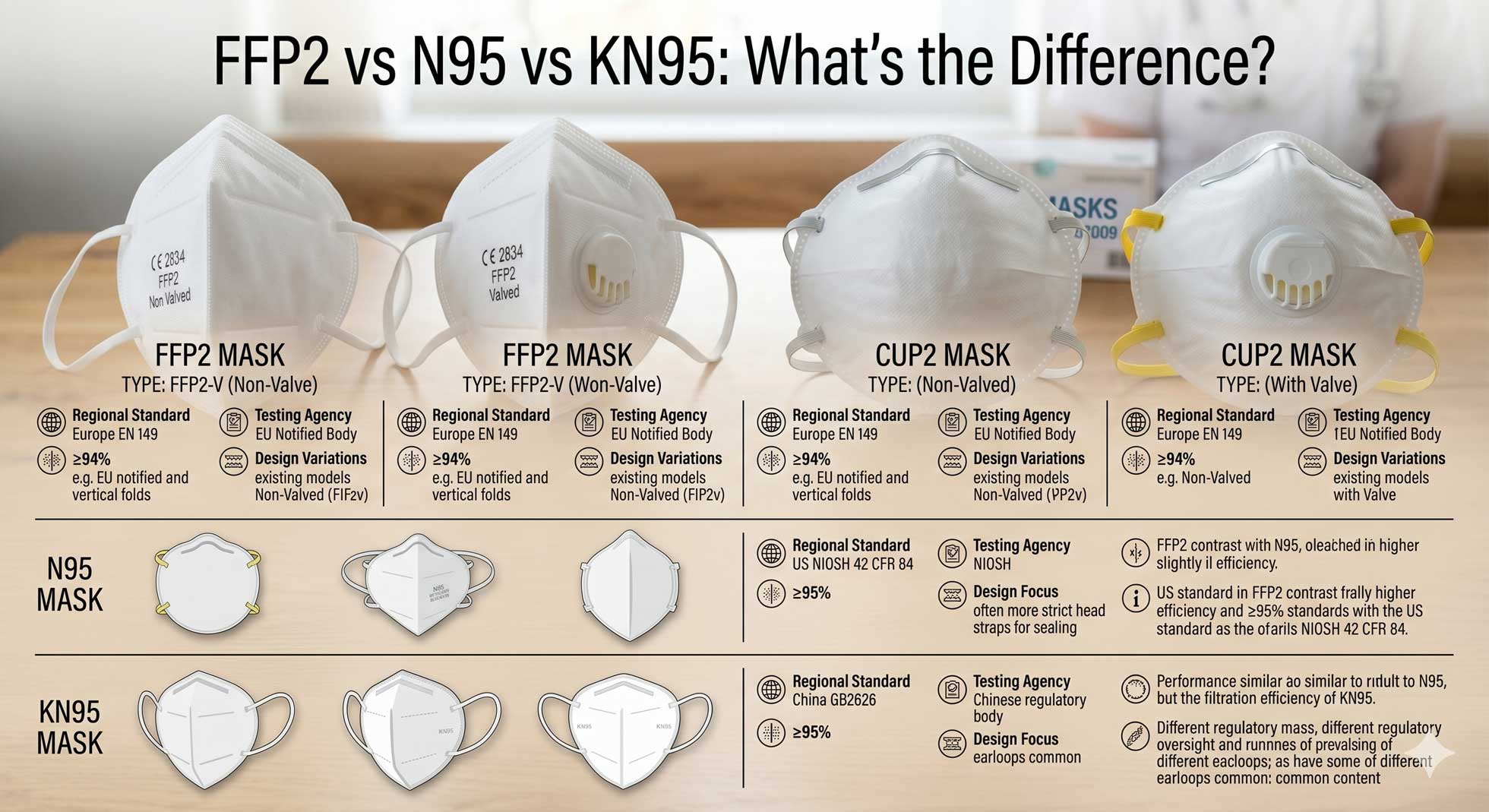
One of the most common online searches is the comparison between FFP2, N95, and KN95 masks.
Although these respirators are certified under different regional standards, their filtration performance is generally similar.
| Standard | Region | Minimum Filtration |
|---|---|---|
| FFP2 | Europe | ≥94% |
| N95 | United States | ≥95% |
| KN95 | China | ≥95% |
In practical use, all three types are designed to provide effective respiratory protection when properly fitted to the wearer’s face
Why Proper Fit Is Critical
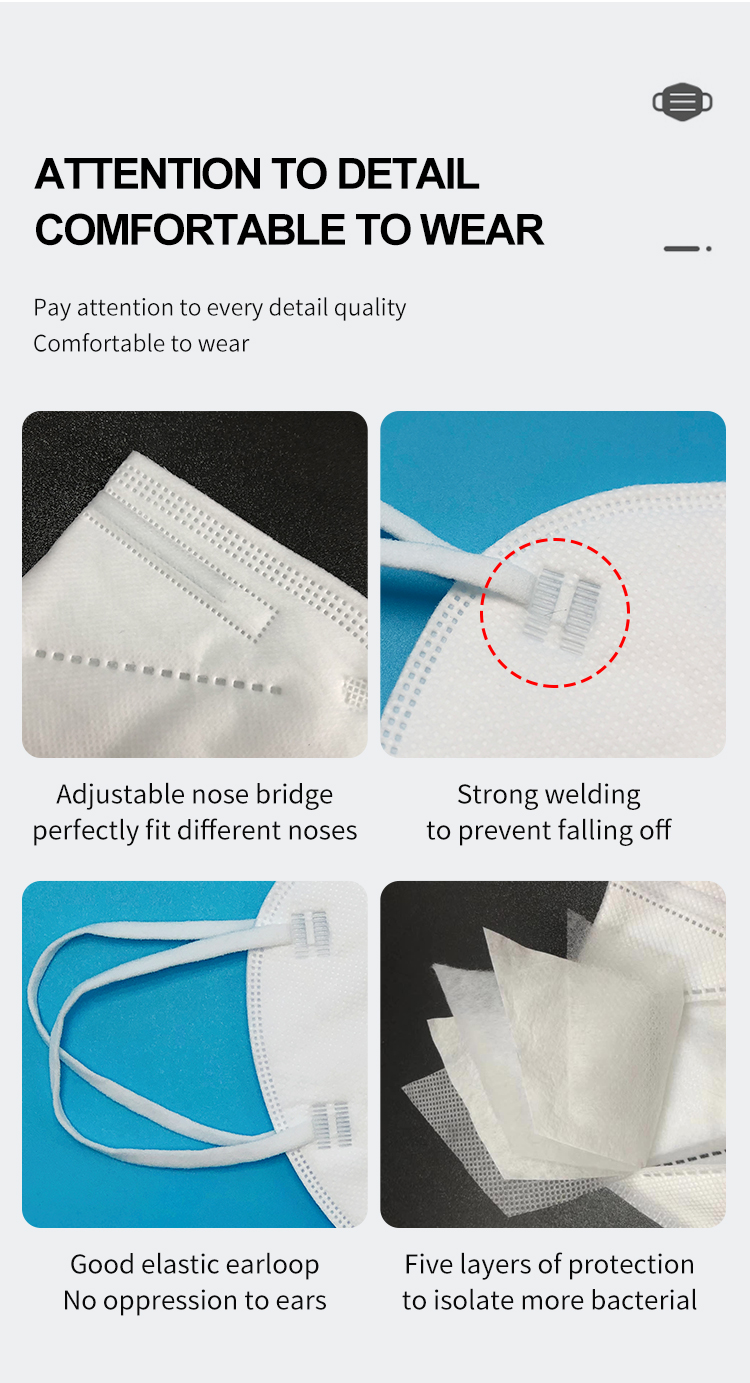
Filtration material alone does not guarantee full protection. A respirator must fit correctly to reduce air leakage around the edges.
Important design features include:
- 1.Adjustable nose bridge
- 2.Secure ear loops or headbands
- 3.Stable facial sealing structure
- 4.Comfortable shape for long-term use
A poorly fitted respirator may allow contaminated air to bypass the filtration layer, reducing actual protection efficiency.
For this reason, professional buyers often evaluate both certification and ergonomic design before purchasing large quantities.
Common FFP2 Mask Designs
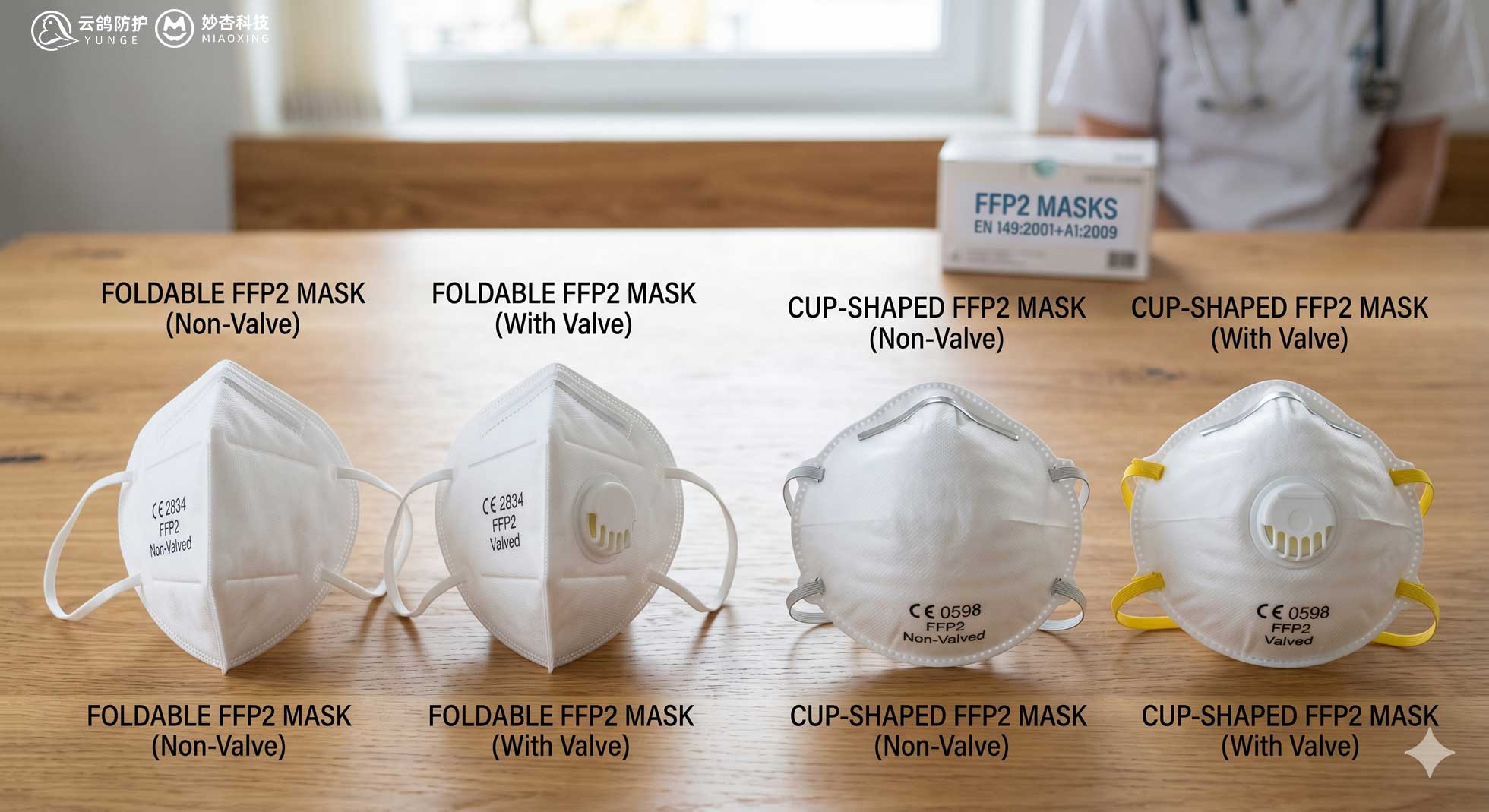
Foldable FFP2 Masks
These models are lightweight and easy to store or transport. They are commonly used in healthcare, travel, and retail environments.
Cup-Shaped FFP2 Masks
Cup-style respirators maintain a rigid shape, creating more breathing space inside the mask. They are widely used in industrial workplaces.
Valve and Non-Valve Models
Valve respirators help reduce heat and moisture buildup, improving comfort during heavy labor. However, non-valve masks are generally preferred in medical and public settings because they help reduce outward particle transmission.
How to Verify an Authentic FFP2 Mask
A compliant FFP2 product should clearly display:
- 1.CE certification mark
- 2.EN149 standard information
- 3.Manufacturer identification
- 4.Product batch details
Professional buyers should avoid respirators without traceable certification or testing information.
Reliable manufacturers also provide technical data sheets, filtration test reports, and quality inspection documentation for international buyers.
Sustainability Is Becoming More Important
Environmental concerns are now influencing PPE purchasing decisions across many markets.
Manufacturers are investing in:
- 1.Eco-friendly nonwoven materials
- 2.Reduced packaging waste
- 3.Improved production efficiency
- 4.Longer-lasting filtration technology
Many distributors and industrial buyers now consider sustainability alongside filtration performance and pricing.
Future Development of FFP2 Respirators
The future of respiratory protection is moving toward smarter, more comfortable, and more sustainable products.
Emerging industry trends include:
- 1.Nanofiber filtration materials
- 2.Lightweight respirator structures
- 3.Smart sensor monitoring systems
- 4.Enhanced breathable designs
- 5.Low-resistance filtration technology
As global industries continue prioritizing worker safety and air quality protection, FFP2 masks are expected to remain an important category within the PPE market.
Conclusion
FFP2 respirators have evolved far beyond temporary emergency products. Today, they are widely used across healthcare, industrial manufacturing, cleanroom production, transportation, and daily personal protection applications.
For buyers, choosing a reliable FFP2 supplier involves more than comparing prices. Product certification, filtration efficiency, comfort, manufacturing consistency, and supply chain stability are all critical factors.
As the global PPE industry continues to develop, high-quality FFP2 masks will remain an essential solution for respiratory protection worldwide.
Post time: May-28-2026