As consumers and brands look for more environmentally responsible alternatives to traditional wipes, flushable spunlace nonwoven fabric has become one of the fastest-growing materials in the hygiene industry. Unlike conventional nonwoven wipes that may contribute to sewer blockages, high-quality flushable spunlace fabrics are engineered to disperse rapidly after flushing while maintaining excellent wet strength during use.
In this guide, we’ll explain what flushable spunlace nonwoven fabric is, how it is manufactured, its key advantages, common applications, and what buyers should consider when sourcing this innovative material.
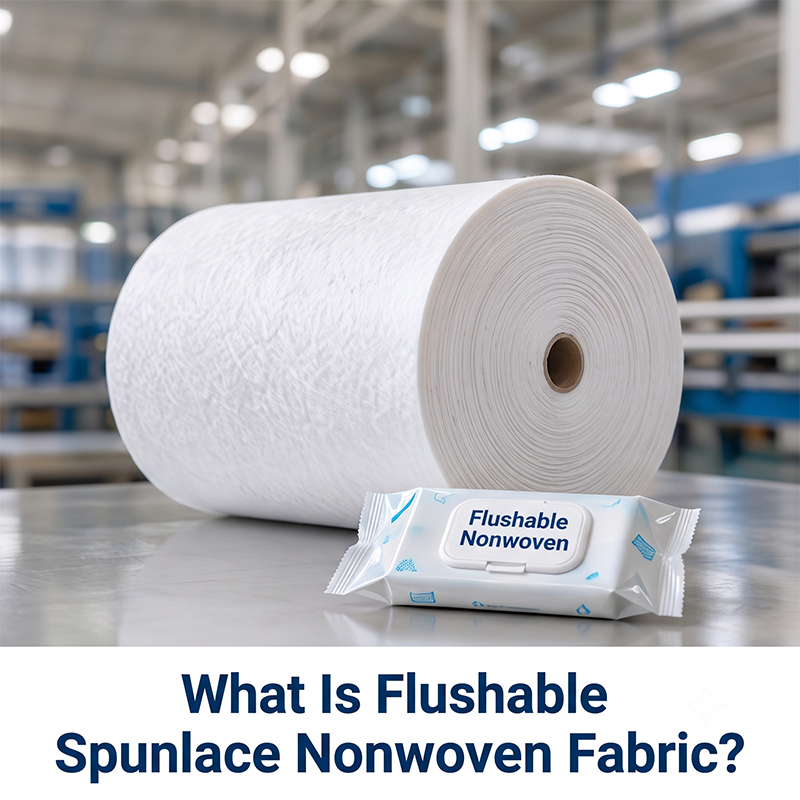
What Is Flushable Spunlace Nonwoven Fabric?
Flushable spunlace nonwoven fabric is a hydroentangled nonwoven specifically designed to break apart after entering a sewage system while remaining durable enough during normal use.
Unlike traditional polyester-based nonwoven fabrics, flushable materials are typically produced from biodegradable plant-based fibers, such as:
- Wood pulp
- Viscose (Rayon)
- Lyocell
- Natural cellulose fibers
These fibers are entangled together using high-pressure water jets instead of chemical binders, creating a soft yet strong fabric with excellent dispersibility.
The result is a material that offers:
- Excellent softness
- High liquid absorbency
- Good tensile strength during use
- Rapid dispersion after flushing
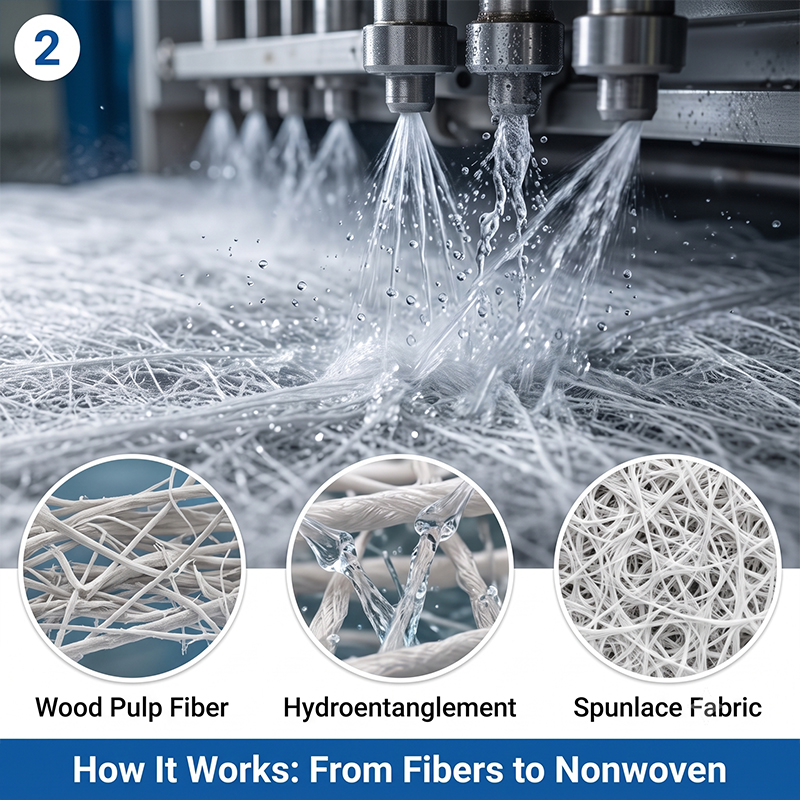
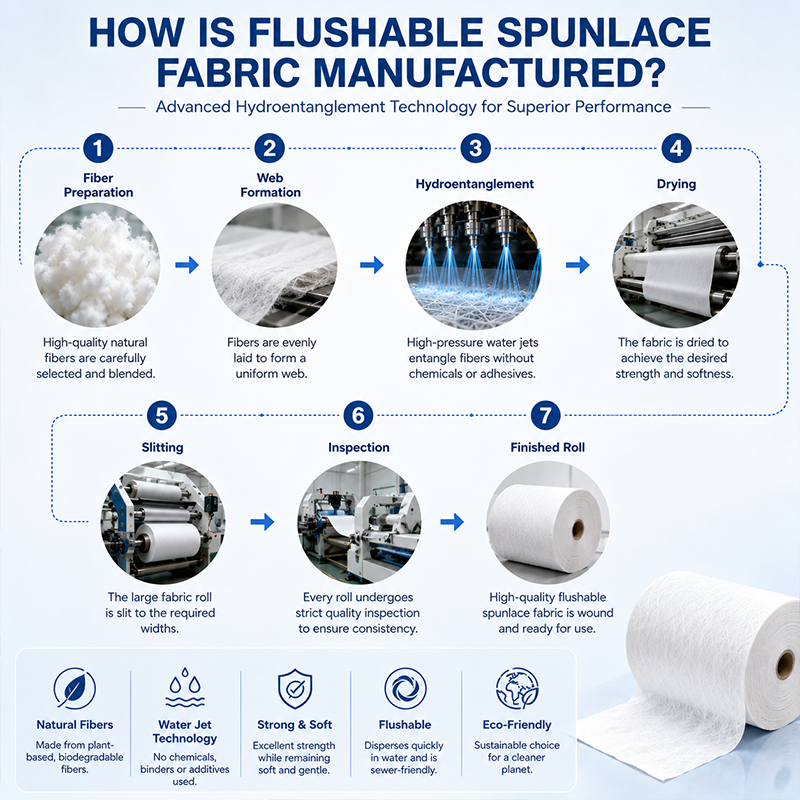
How Is Flushable Spunlace Fabric Manufactured?
The production process combines advanced hydroentanglement technology with carefully selected cellulose fibers.
Typical manufacturing steps include:
1. Fiber Preparation
Natural cellulose fibers are blended according to the required strength and dispersibility.
2. Web Formation
The fibers are evenly laid into a uniform web.
3. Hydroentanglement
Multiple rows of high-pressure water jets intertwine the fibers without adhesives.
4. Drying
The fabric is dried while maintaining softness and bulk.
5. Winding and Inspection
Finished rolls undergo quality inspection before packaging.
Modern production lines can precisely control:
- Basis weight
- Thickness
- Softness
- Wet strength
- Flushability performance
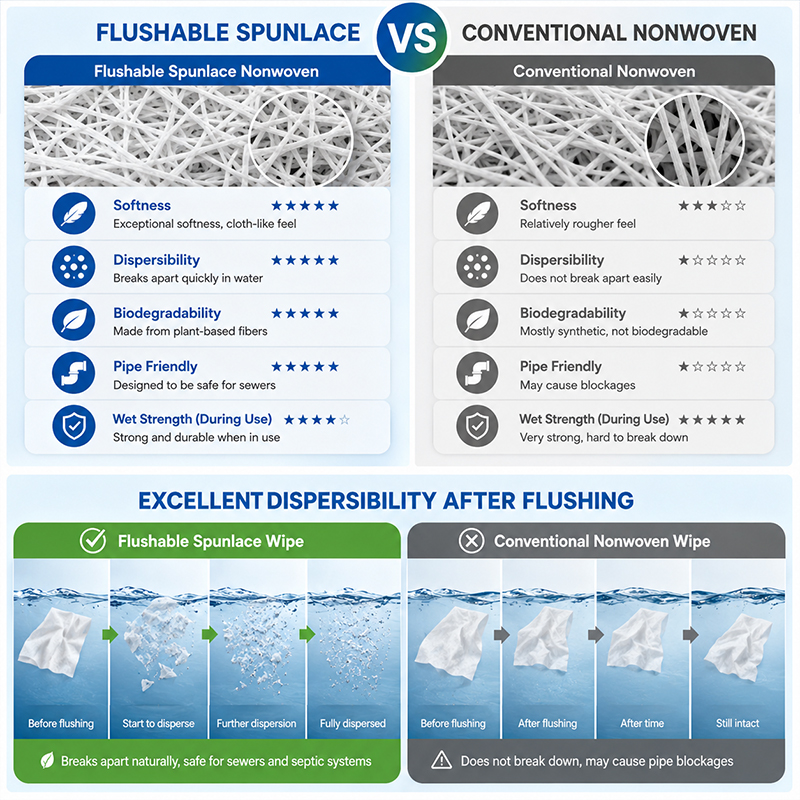
Why Is Flushable Spunlace Fabric Different from Regular Nonwoven?
Many consumers mistakenly assume every wipe labeled “flushable” is safe for sewer systems.
In reality, only specially engineered flushable spunlace materials are designed to disperse according to recognized testing standards.
| Feature | Flushable Spunlace | Conventional Nonwoven |
|---|---|---|
| Flushability | Excellent | Poor |
| Dispersibility | Rapid | Very Low |
| Softness | Excellent | Good |
| Wet Strength | Controlled | High |
| Biodegradability | High | Low |
| Sewer Compatibility | Designed for it | Not recommended |
Key Advantages of Flushable Spunlace Nonwoven Fabric
Excellent Dispersibility
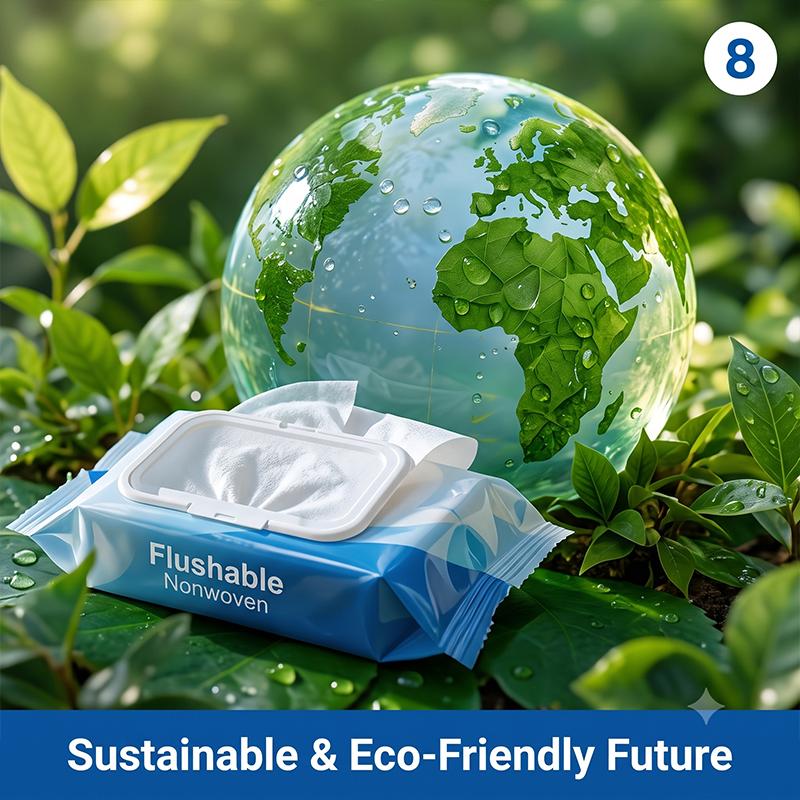
The biggest advantage is its ability to rapidly separate into individual fibers after entering moving water, reducing the likelihood of pipe blockage.
Superior Softness
Hydroentanglement creates a cloth-like texture that feels comfortable on sensitive skin.
This makes it ideal for:
- Baby wipes
- Adult hygiene wipes
- Feminine hygiene products
- Personal cleansing wipes
High Absorbency
Cellulose fibers naturally absorb water efficiently, allowing wipes to retain cleaning solution while delivering excellent cleaning performance.
Biodegradable Composition
Many flushable spunlace fabrics contain little or no synthetic plastic fibers.
Depending on the fiber composition, they may biodegrade significantly faster than conventional polypropylene wipes.
Strong During Use
Although designed to disperse after disposal, quality flushable spunlace maintains sufficient wet tensile strength during actual cleaning.
This balance between strength and dispersibility is achieved through precise fiber selection and hydroentanglement technology.
Common Applications
Flushable spunlace nonwoven is widely used across personal care and hygiene industries.
Typical applications include:
Flushable Wet Wipes
- Toilet wipes
- Adult cleansing wipes
- Moist toilet tissue
Baby Care
Soft baby wipes requiring skin-friendly materials.
Feminine Hygiene
Personal intimate wipes designed for sensitive skin.
Healthcare
Disposable cleansing wipes used in hospitals and nursing facilities.
Travel and Hospitality
Portable hygiene wipes for airlines, hotels, restaurants, and public facilities.
Does Flushable Mean Biodegradable?
Not necessarily.
Although many flushable fabrics are biodegradable, the two terms describe different performance characteristics.
Flushable refers to the material’s ability to disperse safely in wastewater systems.
Biodegradable refers to the material’s ability to break down naturally through biological processes over time.
A premium flushable spunlace fabric can often achieve both properties, depending on its fiber composition and manufacturing process.
Industry Standards for Flushability
Responsible manufacturers typically evaluate their materials according to internationally recognized guidelines.
Common testing methods include:
- EDANA GD4 Guidelines
- INDA/EDANA Flushability Assessment
- Slosh Box Test
- Drainline Clearance Test
- Household Pump Test
- Municipal Sewer Simulation
These tests help verify whether the material disperses appropriately under realistic wastewater conditions.
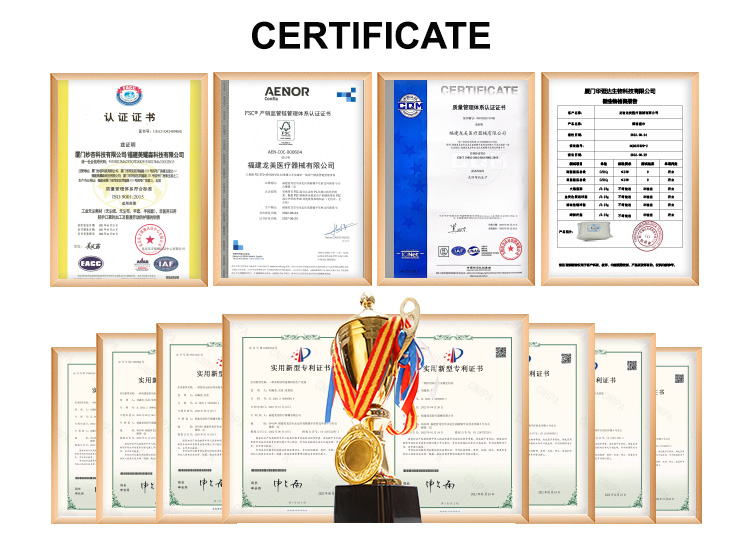
When sourcing flushable nonwoven fabric, buyers should request laboratory reports rather than relying solely on marketing claims.
How to Choose a Reliable Flushable Spunlace Supplier
When evaluating suppliers, consider the following factors:
Production Experience
Choose manufacturers with dedicated hydroentanglement production lines and experience in flushable nonwoven development.
Fiber Selection
Ask about the cellulose content and whether synthetic fibers are used.
Quality Consistency
Stable basis weight and uniform fiber distribution improve product performance.
Testing Capability
Reliable suppliers should provide third-party flushability test reports and internal quality control documentation.
Customization
OEM manufacturers should support customized:
- Basis weight
- Roll width
- Embossing
- Color
- Packaging
- Fiber blends
Future Trends of Flushable Nonwoven Fabric
Growing environmental awareness and increasing regulations on single-use plastics continue to drive demand for sustainable wipe materials.
Future developments are expected to focus on:
- Higher renewable fiber content
- Improved dispersibility
- Lower carbon footprint
- Plastic-free formulations
- Enhanced softness
- Sustainable manufacturing processes
As wet wipe regulations become more stringent worldwide, flushable spunlace nonwoven is expected to play an increasingly important role in hygiene product innovation.
Conclusion
Flushable spunlace nonwoven fabric represents an important advancement in sustainable hygiene materials. By combining softness, absorbency, controlled wet strength, and rapid dispersibility, it offers manufacturers an environmentally responsible alternative to conventional nonwoven fabrics.
For brands developing next-generation wet wipes, selecting high-quality flushable spunlace fabric from an experienced manufacturer can improve product performance while supporting sustainability goals and meeting evolving market expectations.
FAQ
Is flushable spunlace nonwoven fabric safe for sewer systems?
High-quality flushable spunlace fabrics are engineered to disperse according to recognized flushability standards. However, performance depends on the material formulation and compliance with industry testing guidelines.
Can flushable spunlace be used for baby wipes?
Yes. Its soft texture, high absorbency, and skin-friendly cellulose fibers make it a popular choice for premium baby wipes.
What materials are commonly used in flushable spunlace?
Typical fiber blends include wood pulp, viscose, lyocell, and other biodegradable cellulose fibers designed to provide both strength during use and dispersibility after flushing.
Is flushable spunlace biodegradable?
Many flushable spunlace fabrics are biodegradable, especially those made primarily from natural cellulose fibers. The biodegradation rate depends on the specific fiber composition.
Can manufacturers customize flushable spunlace fabric?
Yes. Most OEM suppliers offer customization options such as basis weight, roll width, embossing pattern, fiber blend, color, and packaging.
Post time: Jul-15-2026