Meta Description: Learn the key differences between biodegradable nonwoven and flushable nonwoven. Compare materials, performance, applications, environmental impact, and choose the right solution for your wet wipes.
Introduction
As sustainability becomes a major focus in the global hygiene industry, manufacturers are increasingly looking for environmentally responsible alternatives to traditional nonwoven materials. Two terms frequently appear in product specifications and industry discussions: biodegradable nonwoven and flushable nonwoven.
Although these materials are often mentioned together, they are not the same. A fabric can be biodegradable without being flushable, and a flushable nonwoven may not automatically meet every definition of biodegradability. Confusing these concepts can lead to product design issues, regulatory challenges, or mismatched customer expectations.
Whether you’re developing baby wipes, toilet wipes, personal care products, or household cleaning wipes, understanding the differences between these two materials is essential.
In this guide, we’ll compare biodegradable nonwoven and flushable nonwoven from multiple perspectives, including raw materials, manufacturing technology, performance, environmental characteristics, applications, and how to choose the right material for your business.
What Is Biodegradable Nonwoven Fabric?
Biodegradable nonwoven fabric is designed to decompose naturally over time through the action of microorganisms under suitable environmental conditions. Instead of remaining in landfills or the natural environment for decades, biodegradable materials gradually break down into simpler substances such as water, carbon dioxide (or methane in anaerobic conditions), and biomass.
These fabrics are typically produced from renewable or naturally derived fibers, including:
- Wood pulp
- Viscose
- Lyocell
- Cotton
- Bamboo fibers
- Polylactic acid (PLA) in certain applications
The primary goal of biodegradable nonwoven fabric is to reduce long-term environmental impact after disposal. However, biodegradability does not necessarily indicate that the material is suitable for flushing through wastewater systems.
What Is Flushable Nonwoven Fabric?
Flushable nonwoven fabric is engineered with a different objective. Rather than focusing solely on biodegradation, it is designed to maintain sufficient strength during use and then disperse quickly after being flushed under appropriate conditions.
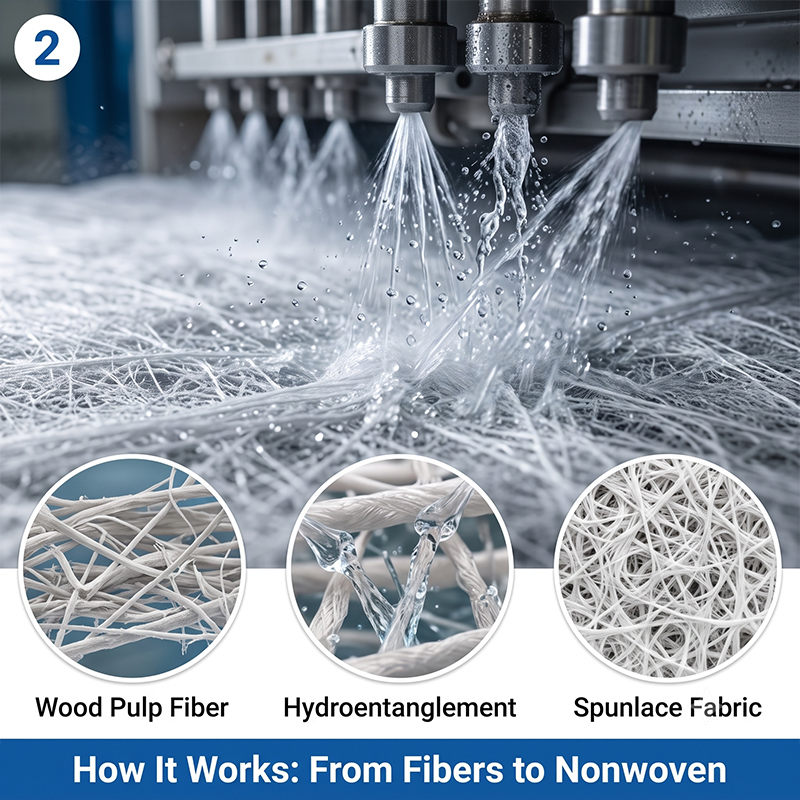
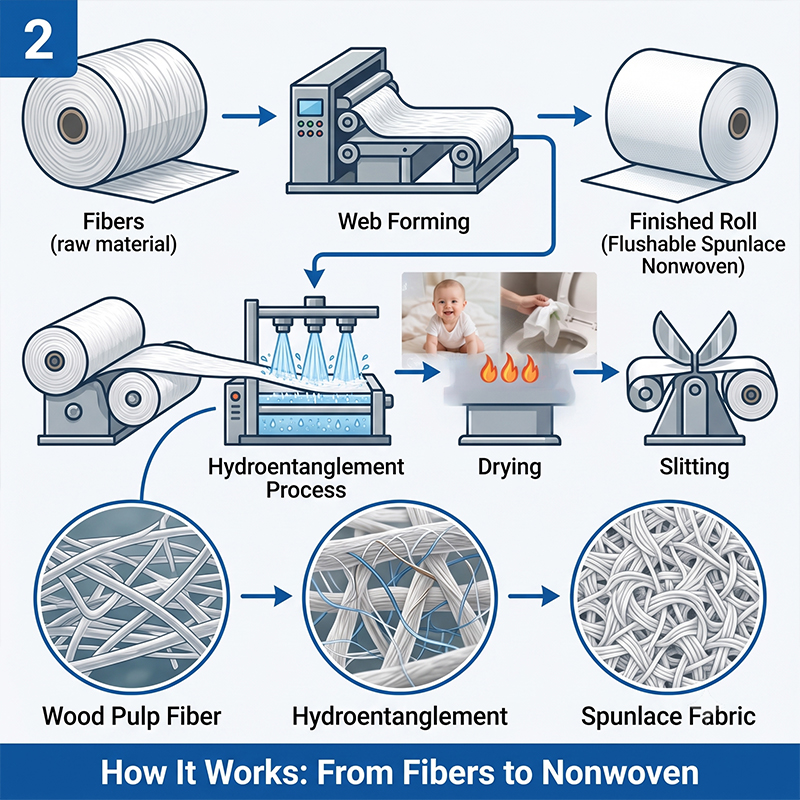
Flushable nonwoven materials are commonly manufactured using the spunlace (hydroentanglement) process, which mechanically entangles cellulose-rich fibers without relying on heavy thermal bonding.
A well-designed flushable substrate offers:
- Softness
- Wet strength during use
- Controlled dispersibility
- High absorbency
- Compatibility with flushability testing methods
The emphasis is on short-term behavior in wastewater systems, not simply long-term decomposition.
Biodegradable Does Not Always Mean Flushable
One of the most common misconceptions in the nonwoven industry is that biodegradable materials can always be flushed safely.
In reality, these two properties measure different aspects of material performance.
A biodegradable nonwoven may eventually decompose in composting or natural environments, but it can still remain intact long enough to create problems in sewer systems if it lacks sufficient dispersibility.
Conversely, a flushable nonwoven is engineered to disperse rapidly after flushing. Depending on its fiber composition, it may also be biodegradable, but flushability and biodegradability are evaluated using different testing methods and should not be considered interchangeable.
Understanding this distinction is particularly important for product developers and OEM buyers targeting different regional markets and regulatory requirements.
Biodegradable Nonwoven vs Flushable Nonwoven: A Detailed Comparison
| Feature | Biodegradable Nonwoven | Flushable Nonwoven |
|---|---|---|
| Primary Purpose | Reduce long-term environmental impact | Disperse safely after flushing |
| Main Performance | Biodegradation | Controlled dispersibility |
| Typical Materials | Wood pulp, viscose, lyocell, cotton, PLA | Cellulose-rich spunlace fibers |
| Manufacturing | Various nonwoven technologies | Primarily spunlace (hydroentanglement) |
| Wet Strength | Depends on application | Carefully engineered |
| Dispersibility | Not always | Essential requirement |
| Typical Applications | Packaging, agriculture, hygiene products | Toilet wipes, personal hygiene wipes |
| Sustainability Focus | Natural decomposition | Wastewater compatibility plus sustainability |
Raw Materials: What Makes Them Different?
Both biodegradable and flushable nonwoven fabrics often rely on cellulose-based fibers, but the fiber blend and structural design are optimized differently.
Biodegradable materials prioritize decomposition after disposal and may include fibers selected for compostability or renewable sourcing.
Flushable materials prioritize a balance between strength during use and rapid fiber separation in moving water. As a result, manufacturers often use carefully controlled combinations of wood pulp, viscose, or lyocell to achieve the desired dispersibility without compromising performance.
The choice of raw material depends on the final application rather than environmental claims alone.
Performance Comparison
Softness
Both materials can provide excellent softness when manufactured using spunlace technology.
Wet Strength
Flushable nonwoven fabrics are specifically engineered to maintain integrity during use while allowing controlled breakdown afterward. Biodegradable materials may require either higher or lower wet strength depending on the end product.
Liquid Absorption
Cellulose-rich structures in both materials deliver excellent absorbency, making them suitable for wet wipes and personal care products.
Durability
Biodegradable materials designed for industrial or agricultural applications may offer greater durability than flushable materials, which intentionally sacrifice long-term structural stability to achieve dispersibility.
Which Material Is Better for Wet Wipes?
The answer depends on the intended use.
For flushable toilet wipes, flushable nonwoven fabric is generally the preferred option because dispersibility is a critical performance requirement.
For baby wipes, facial wipes, and household cleaning wipes, manufacturers may choose biodegradable nonwoven, flushable nonwoven, or a material that combines both characteristics, depending on regional regulations, product positioning, and customer expectations.
Rather than asking which material is universally better, manufacturers should determine which performance characteristics are most important for the target market.
Environmental Considerations
Environmental performance involves more than a single claim.
A sustainable nonwoven material may incorporate several complementary characteristics, including:
- Renewable raw materials
- Reduced plastic content
- Responsible forestry sourcing
- Lower dependence on synthetic binders
- Appropriate end-of-life behavior for the intended disposal method
Choosing the most sustainable solution requires considering the entire product lifecycle, from raw material sourcing to manufacturing, use, and disposal.
How to Choose the Right Nonwoven Material
When selecting between biodegradable and flushable nonwoven fabric, consider the following questions:
- How will the finished product be disposed of?
- Is wastewater dispersibility required?
- Which environmental claims are appropriate for the target market?
- What level of wet strength is needed during use?
- What certifications or testing standards are required?
- Can the supplier provide consistent quality and technical support?
A reliable nonwoven manufacturer should help evaluate these factors and recommend the most suitable material based on the product’s intended application.
Frequently Asked Questions
Is biodegradable nonwoven fabric flushable?
Not necessarily. Biodegradability and flushability measure different material properties and should not be considered equivalent.
Can flushable nonwoven fabric also be biodegradable?
Yes. Many flushable nonwoven fabrics use cellulose-based fibers that are biodegradable under appropriate environmental conditions. However, both characteristics should be verified independently.
Which material is better for toilet wipes?
Flushable nonwoven fabric is generally preferred because it is specifically engineered for dispersibility after flushing.
Are cellulose fibers environmentally friendly?
Cellulose fibers are derived from renewable plant sources and are widely used in sustainable nonwoven products. Their overall environmental impact depends on sourcing, manufacturing, and disposal practices.
How can OEM buyers select the right material?
Evaluate the intended application, disposal method, technical performance requirements, and supplier capabilities before choosing a material.
Conclusion
Biodegradable nonwoven and flushable nonwoven share a common goal of supporting more sustainable hygiene products, but they are designed to solve different challenges.
Biodegradable nonwoven focuses on natural decomposition over time, making it suitable for products where long-term environmental impact is the primary concern. Flushable nonwoven focuses on controlled dispersibility after flushing, making it the preferred choice for toilet wipes and other products intended for wastewater disposal.
For manufacturers and brand owners, understanding these differences is essential when developing new products or selecting an OEM supplier. By matching material performance to the intended application—and by relying on verified testing rather than marketing claims—businesses can create products that meet consumer expectations, support sustainability goals, and comply with evolving industry standards.
Post time: Jul-10-2026