The global wipes market is undergoing a major transformation. As environmental regulations tighten and consumers become more conscious of sustainability, flushable spunlace nonwoven is quickly emerging as a preferred material for next-generation hygiene products.
For B2B buyers, importers, and private label brands, understanding this material is no longer optional—it is a competitive advantage.
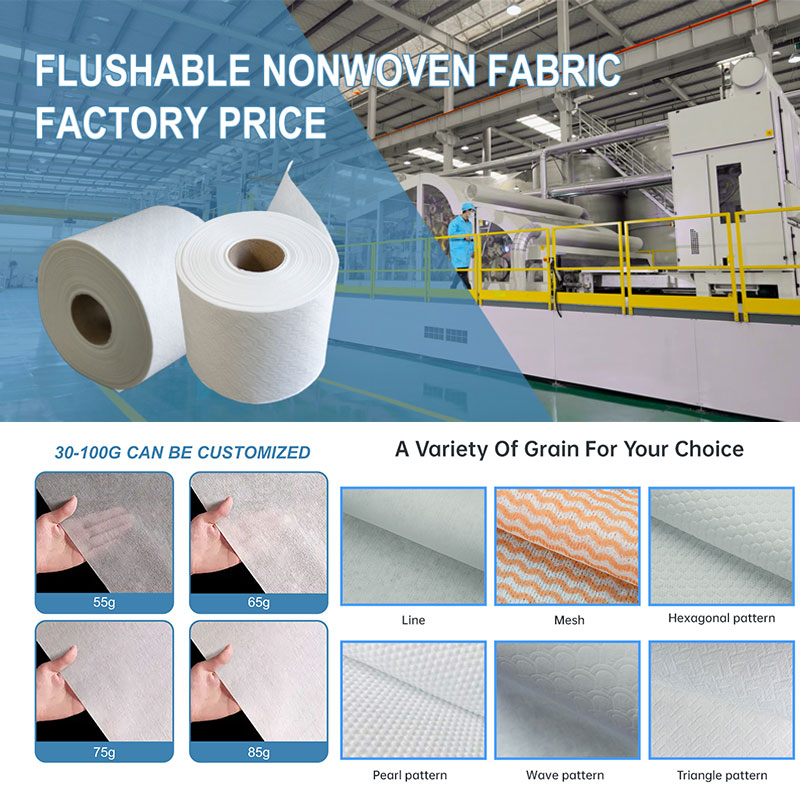
From “Convenient” to “Responsible”: A Shift in Buyer Demand
In the past, wipes were designed primarily for convenience. Today, the focus has shifted toward safe disposal and environmental impact.
Traditional synthetic-based wipes:
-
1.Do not break down easily
-
2.Contribute to sewer blockages
-
3.Face increasing regulatory restrictions
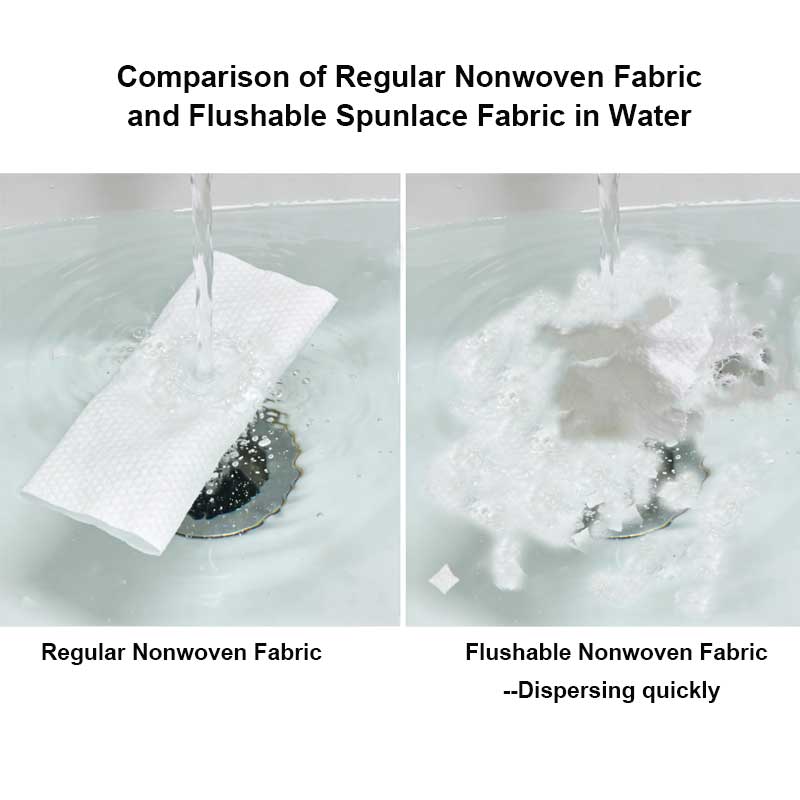
In contrast, flushable spunlace nonwoven is engineered to:
-
1.Disintegrate rapidly after flushing
-
2.Reduce infrastructure pressure
-
3.Align with sustainability policies in Europe and beyond
This shift is driving procurement teams to actively search for:
-
1.“flushable wipes raw material”
-
2.“biodegradable nonwoven fabric”
-
3.“plastic-free wipes solution”
-
Material Innovation: What Makes It Different?
Flushable spunlace nonwoven is not just a standard fabric—it is a precision-engineered material.
Fiber Composition
Typically blends of:
-
1.Natural wood pulp (for dispersibility)
-
2.Viscose fiber (for softness and strength)
Manufacturing Process
Hydroentanglement technology bonds fibers without chemical binders, resulting in:
-
1.Better skin feel
-
2.Improved uniformity
-
3.Eco-friendly production
Controlled Strength vs. Disintegration
One of the biggest technical challenges is balancing:
-
1.Wet tensile strength (during use)
-
2.Rapid breakdown (after disposal)
Advanced manufacturers fine-tune this balance to meet international flushability benchmarks.
Key Buying Considerations for Importers
If you are sourcing flushable spunlace nonwoven, focusing only on price can lead to long-term risks. Here are the critical factors that experienced buyers evaluate:
1. Dispersibility Performance
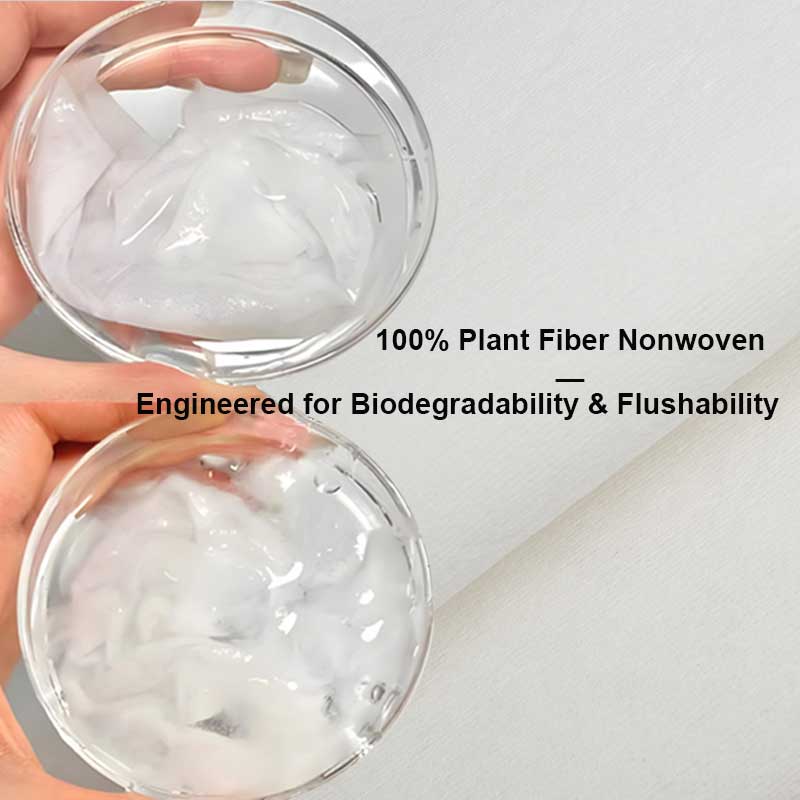
Ask for test reports showing how quickly the fabric breaks down in water.
2. Fiber Transparency
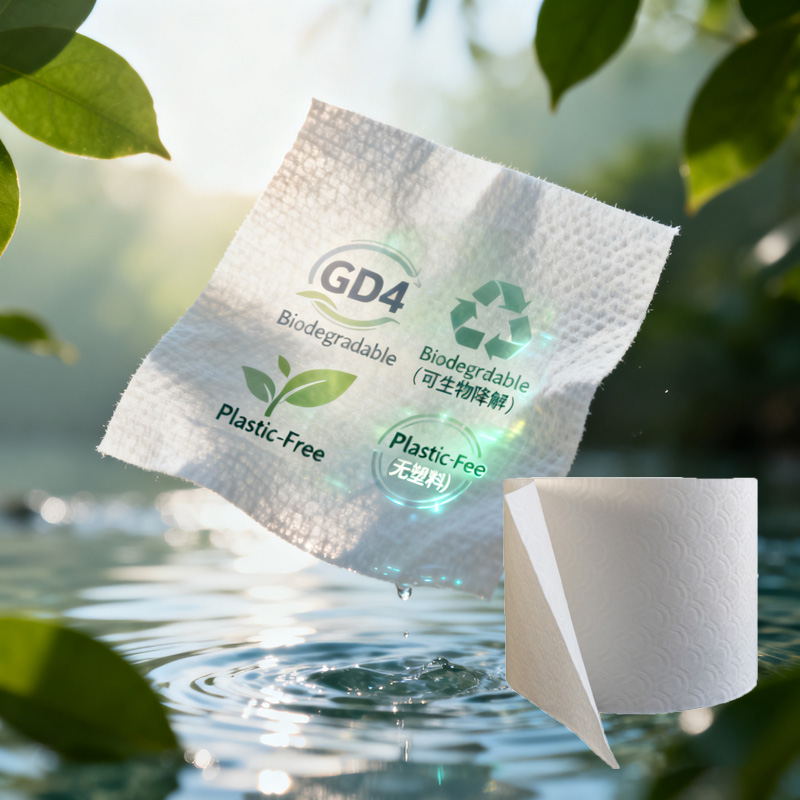
Ensure the material is 100% plastic-free, especially for EU markets.
3. Production Stability
Consistent quality across batches is essential for large-scale wipes production.
4. Custom Development Capability
Can the supplier adjust:
-
Thickness (GSM)
-
Roll width
-
Fiber ratio
5. Export Compliance Experience
Suppliers with experience in Europe and the Middle East are more familiar with regulatory expectations.
High-Growth Applications You Shouldn’t Ignore
Flushable spunlace nonwoven is expanding beyond traditional wipes into multiple segments:
Premium Toilet Wipes
A fast-growing category driven by hygiene awareness and convenience.
Adult Care & Healthcare
Used in hospitals and elderly care for safe and hygienic cleaning.
Travel & On-the-Go Hygiene
Compact, flushable products are increasingly popular among urban consumers.
Private Label Brands
Retailers are launching eco-friendly wipes lines to meet sustainability commitments.
Market Outlook: Strong Growth Driven by Regulation
Several global trends are accelerating demand:
-
1.EU restrictions on single-use plastics
-
2.Increased wastewater management concerns
-
3.Retailer pressure for sustainable sourcing
-
4.Consumer preference for biodegradable products
As a result, flushable nonwoven materials are moving from niche to mainstream.
For distributors and converters, early adoption means:
-
1.Better positioning in tenders
-
2.Higher-value product offerings
-
3.Stronger brand differentiation
FAQ: Flushable Spunlace Nonwoven for B2B Buyers
Q1: What is the difference between flushable and non-flushable wipes material?
Flushable materials are designed to disperse in water, while non-flushable wipes retain strength and may cause blockages.
Q2: Is flushable fabric always biodegradable?
Most are made from natural fibers, but buyers should confirm fiber composition and certifications.
Q3: Can it replace traditional spunlace fabric?
Yes, especially in applications where flushability is required, though cost and performance balance must be considered.
Q4: What industries are driving demand the most?
Personal care, healthcare, and private label retail brands.
Q5: How important is supplier testing capability?
Very important—reliable testing ensures compliance and consistent product performance.
Q6: Does flushable fabric affect wipes formulation?
Yes, liquid formulation and fabric structure must be compatible for optimal performance.
Q7: What roll formats are commonly supplied?
Jumbo rolls for converters, customizable based on production lines.
Q8: Is OEM support common?
Yes, most professional manufacturers offer OEM/ODM services for global buyers.
Final Thoughts
Flushable spunlace nonwoven is more than just a material—it represents a shift toward responsible manufacturing and sustainable consumption.
For B2B buyers aiming to stay competitive in regulated and environmentally conscious markets, investing in this material is not just a trend, but a long-term strategy.
Post time: Mar-17-2026