How to Choose Disposable Protective Clothing for Industrial and Medical Use in 2026
Disposable protective clothing is no longer a product purchased only during emergencies. In 2026, it has become a routine procurement item for hospitals, laboratories, pharmaceutical factories, chemical plants, and food production facilities.
If you search on Google for terms like disposable protective clothing, Type 5 Type 6 coverall, or CE certified protective suit, you will notice that buyers are no longer asking “What is it?” — they are asking:
-
Which protection level do I need?
-
Is it compliant with EU standards?
-
How breathable is the fabric?
-
Which supplier can guarantee stable bulk delivery?
This article breaks down the key factors B2B buyers should evaluate before placing an order.
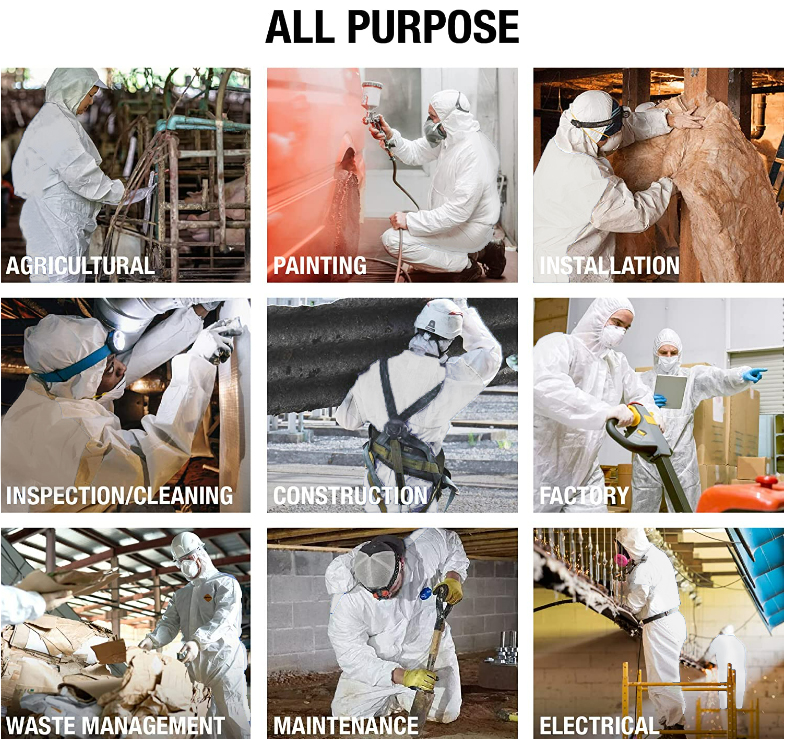
Why Disposable Protective Clothing Remains in High Demand
Several long-term factors continue to drive global search interest and procurement volume:
1. Stronger Workplace Safety Regulations
Across Europe and the Middle East, employers must comply with stricter occupational safety standards. Protective clothing is mandatory in environments involving dust, particles, light chemicals, or biological risks.
2. Ongoing Infection Control Awareness
Healthcare institutions and laboratories now maintain higher baseline PPE inventory levels. Disposable solutions reduce cross-contamination and simplify waste management.
3. Growth in Pharmaceutical & Industrial Manufacturing
As pharmaceutical production, electronics manufacturing, and cleanroom industries expand, contamination control garments are becoming essential operational tools.
Google search trends reflect this shift: users increasingly combine keywords such as protective clothing supplier, industrial disposable coverall, and CE PPE manufacturer — showing strong purchasing intent.
Understanding Protection Levels: Type 5 vs Type 6
When sourcing disposable protective clothing for the European market, buyers often focus on protection classifications.
Type 5 – Particle Protection
Designed to protect against airborne solid particles.
Common applications:
-
Construction dust environments
-
Industrial sanding and grinding
-
Pharmaceutical powder handling
Type 6 – Limited Liquid Splash Protection
Provides limited protection against light liquid sprays and splashes.
Common applications:
-
Chemical handling (low concentration)
-
Maintenance operations
-
Laboratory use
Understanding the work environment risk level helps avoid over-specifying (which increases cost) or under-protecting (which increases liability).
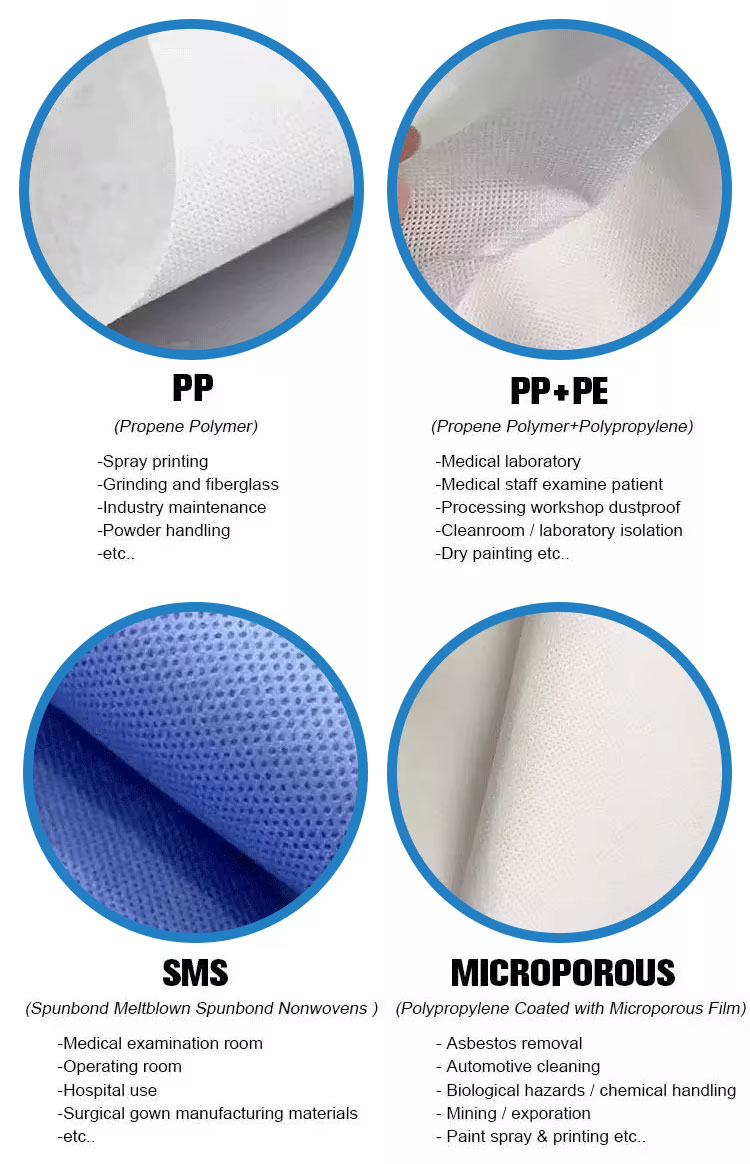
Fabric Matters: Not All Disposable Suits Are the Same
Many product pages simply state “nonwoven fabric,” but serious buyers evaluate composition carefully.
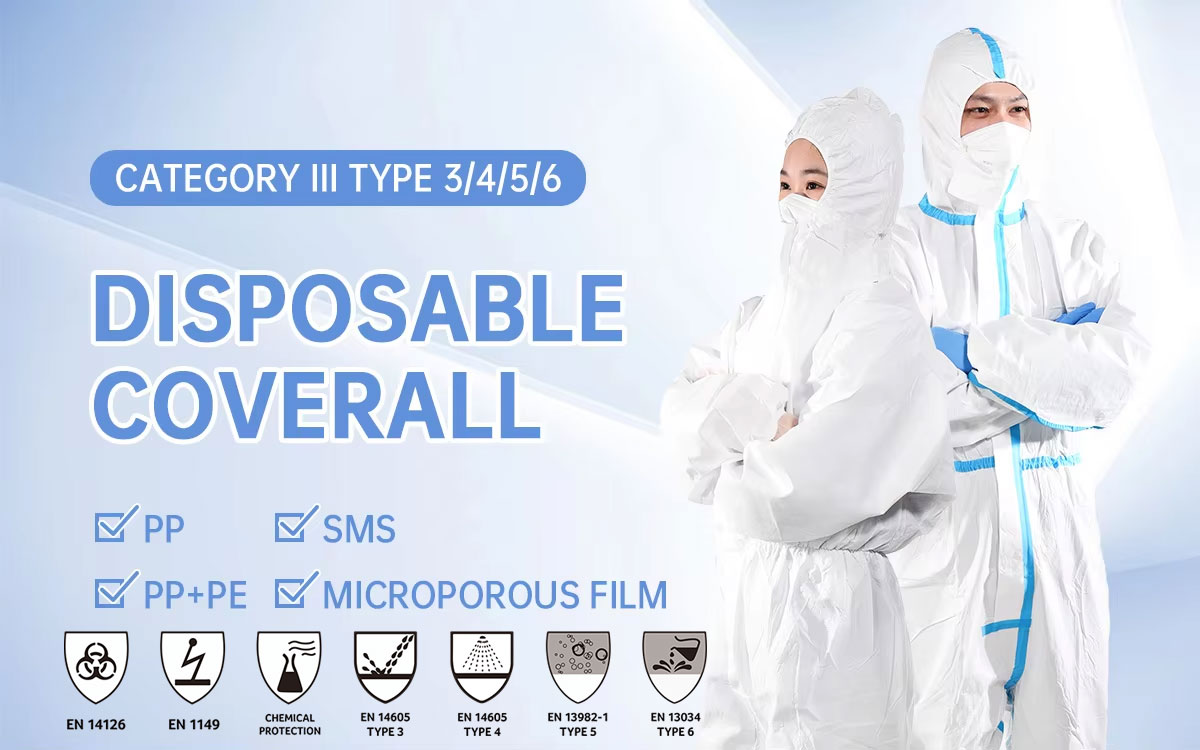
Polypropylene (PP)
-
Economical
-
Lightweight
-
Suitable for low-risk tasks
SMS (Spunbond-Meltblown-Spunbond)
-
Better filtration efficiency
-
Balanced comfort and protection
-
Common in medical protective clothing
Microporous Film Laminated Fabric
-
Superior barrier against liquids
-
Stronger protection performance
-
Popular in industrial and laboratory settings
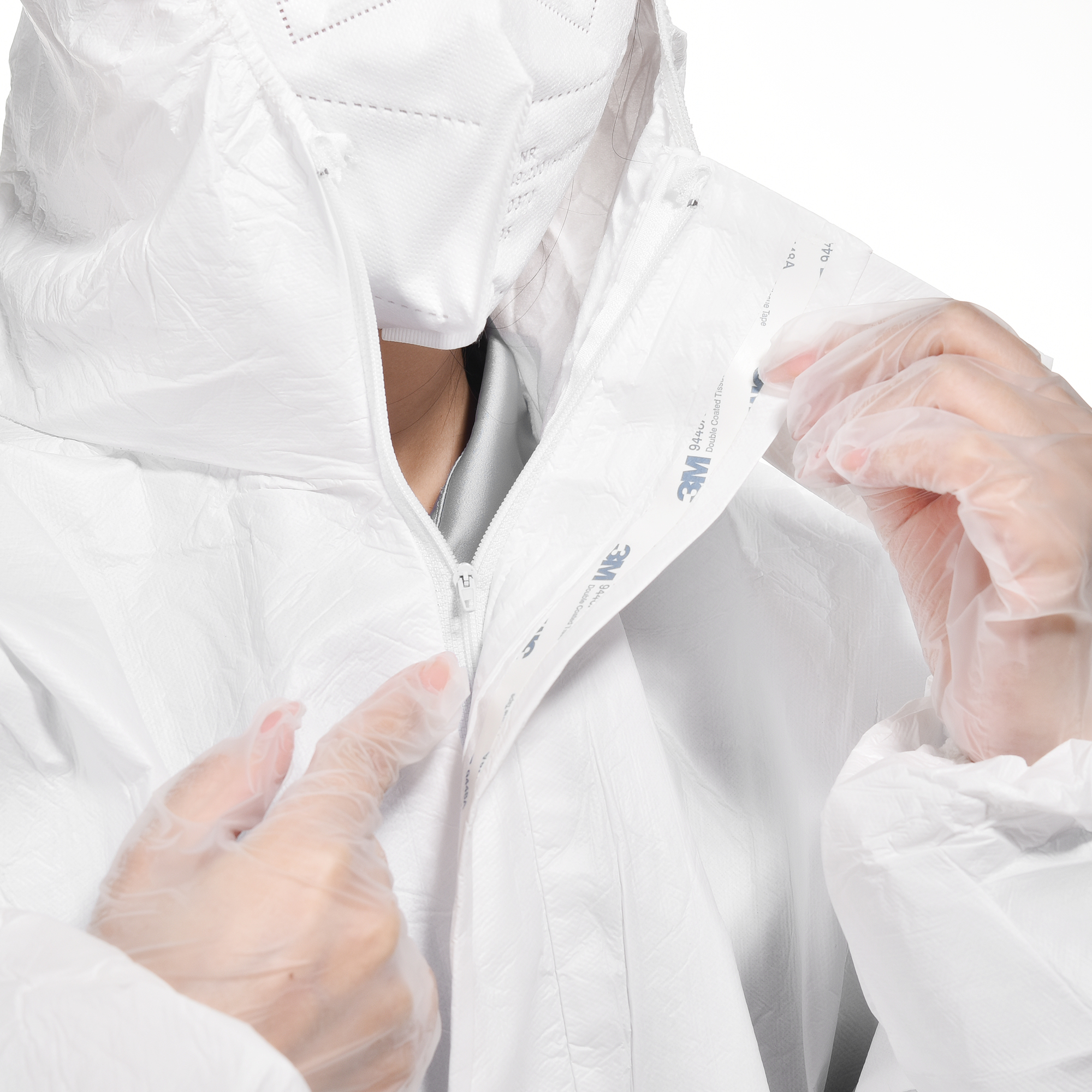
Breathability, tensile strength, and seam sealing technology also impact real-world usability. For long working shifts, comfort becomes just as important as protection level.
What B2B Buyers Should Evaluate Before Ordering
When comparing suppliers, consider more than unit price.
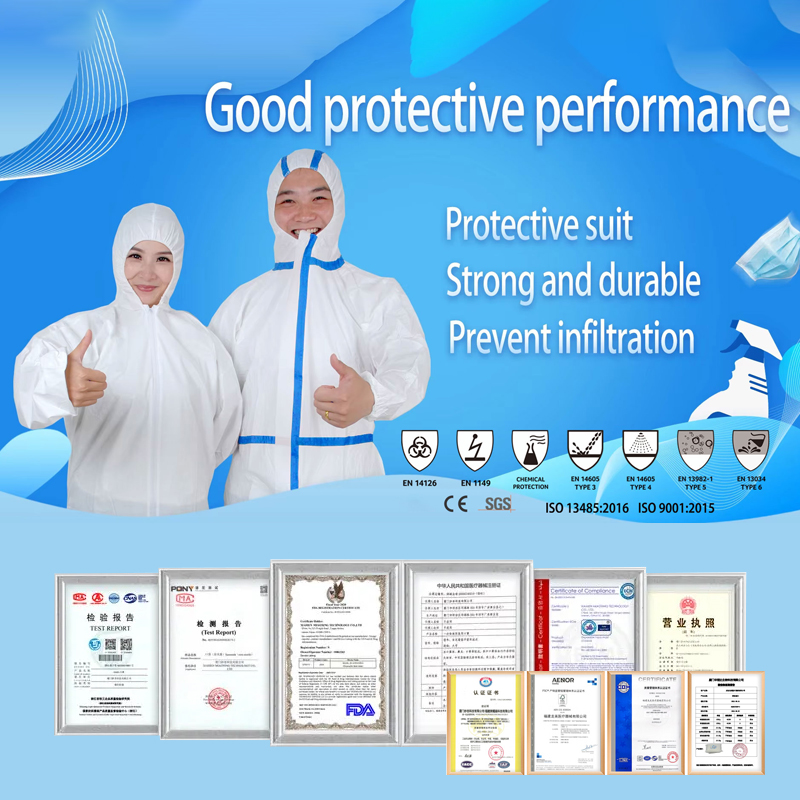
Certification & Compliance
-
CE marking
-
PPE Category III (if applicable)
-
Relevant EN standards documentation
Production Capacity
Can the manufacturer handle bulk orders with consistent quality?
Quality Control System
Are materials tested for:
-
Particle penetration resistance
-
Liquid penetration resistance
-
Fabric strength
Customization Options
Many buyers require:
-
Private labeling
-
Custom packaging
-
Size adjustments
-
Logo printing
A reliable supplier should support OEM requirements without compromising compliance.
Common Mistakes in Purchasing Disposable Protective Clothing
-
Choosing based only on lowest price
-
Ignoring fabric breathability
-
Not verifying certification authenticity
-
Overlooking shipping lead times
-
Failing to calculate long-term consumption volume
Smart procurement teams evaluate total cost efficiency — not just the invoice price.
SEO Insight: What Buyers Are Actually Searching
Based on current Google behavior, high-intent search phrases often include:
-
Disposable protective clothing supplier Europe
-
Industrial protective suit manufacturer
-
CE certified disposable coverall
-
Type 5 Type 6 protective suit bulk
This indicates that most visitors landing on your product page are already in the decision-making phase. Your content should therefore:
-
Provide clear technical specifications
-
Explain protection standards simply
-
Address compliance concerns
-
Build trust through transparency
Educational blog content like this helps capture early-stage traffic, while product-focused pages convert transactional searches.
Final Thoughts
Disposable protective clothing is now a standard requirement in multiple industries, not a temporary demand spike. As safety expectations rise and regulations tighten, selecting the right material, certification level, and manufacturing partner becomes increasingly important.
Post time: Feb-13-2026