As workplace safety standards evolve, FFP3 disposable masks have become a cornerstone of respiratory protection for professionals. These masks not only provide superior filtration but also combine ergonomic design, breathability, and compliance with European EN 149 standards.
This article dives into the technical features, performance benefits, and practical applications of FFP3 masks, helping buyers understand why they are preferred in high-risk environments.
Understanding FFP3 Mask Standards
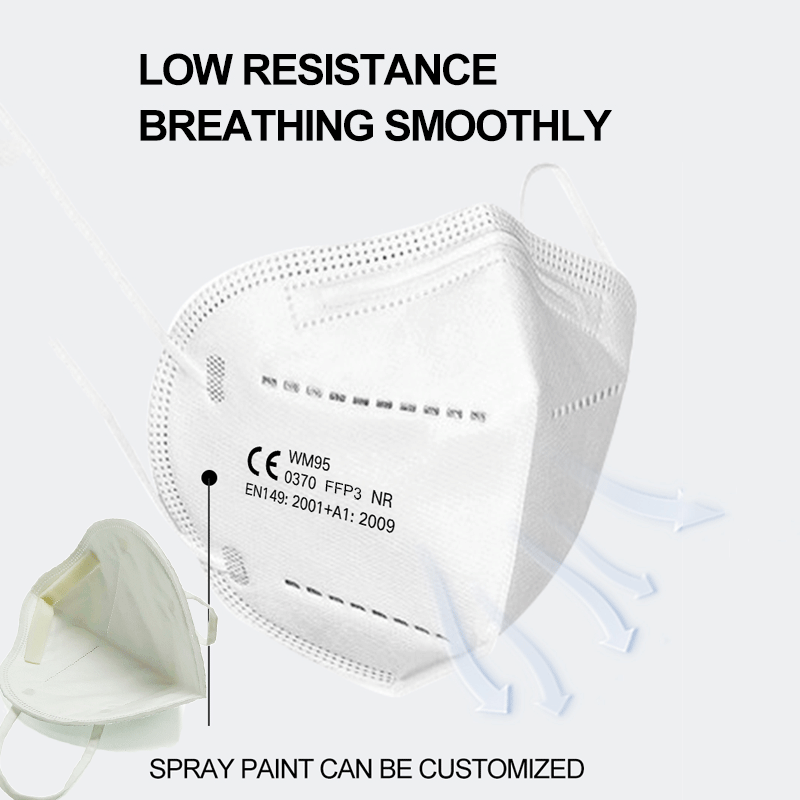
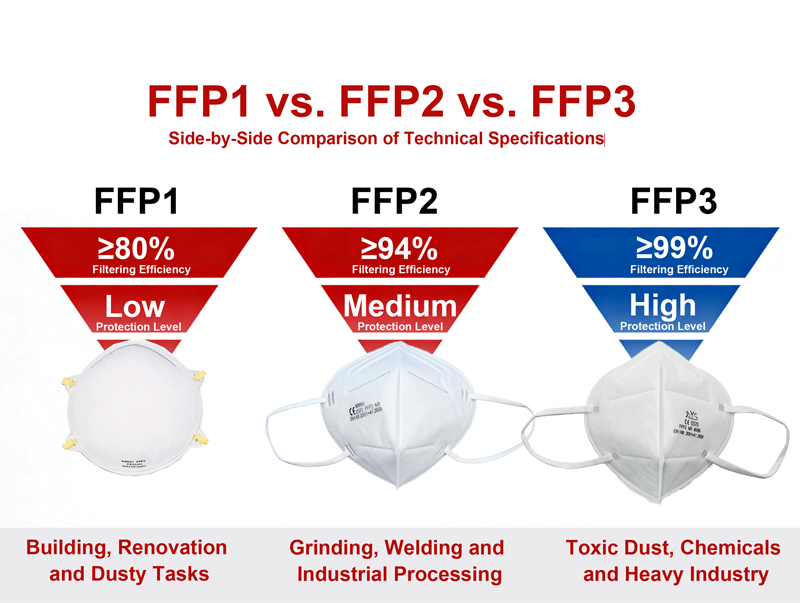
FFP3 disposable masks are classified under EN 149:2001+A1:2009, which defines three levels of filtering facepiece respirators: FFP1, FFP2, and FFP3.
-
1. FFP1: Minimal protection for low-risk dust
-
2. FFP2: Medium-level protection for general industrial environments
-
3. FFP3: Highest filtration efficiency (≥99%) and minimal inward leakage (≤2%)
By adhering to these standards, FFP3 masks ensure reliable protection against fine dust, aerosols, and airborne pathogens.
Key Technical Features of FFP3 Disposable Masks
-
Multi-Layer Filtration System
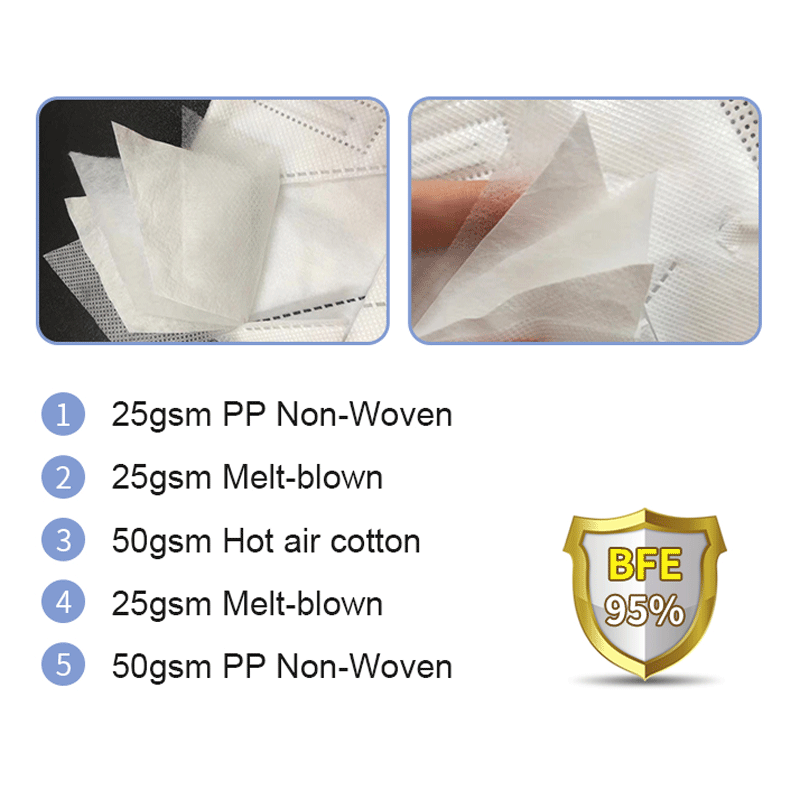
FFP3 masks typically use a three- to five-layer nonwoven structure, including:-
Spunbond outer layer for durability and splash resistance
-
Meltblown filter layer capturing ≥99% of particles
-
Soft inner layer for comfort and moisture absorption
-
-
Secure Fit and Ergonomics
Adjustable nose clips and elastic headbands help maintain a tight seal, reducing air leakage and ensuring consistent protection. -
Breathability and Comfort
Despite high filtration efficiency, FFP3 masks are engineered to optimize airflow, making them suitable for long-duration use in professional environments. -
Certification and Quality Assurance
Each batch undergoes EN 149 testing to verify filtration efficiency and breathing resistance, ensuring compliance and consistent quality for bulk supply.
Applications of FFP3 Disposable Masks
FFP3 masks are widely used where maximum respiratory protection is required:
-
1.Medical and healthcare environments: Hospitals, clinics, and laboratories
-
2.Industrial and chemical sectors: Chemical plants, manufacturing, and pharmaceutical production
-
3.Construction and mining: High-dust and particulate exposure areas
-
4.High-risk occupational settings: Emergency response, decontamination, and hazardous material handling
These versatile applications make FFP3 masks a preferred choice for organizations prioritizing employee safety and compliance.
Benefits of Choosing FFP3 Masks
-
1.Maximum Protection: ≥99% filtration efficiency against airborne particles
-
2.Regulatory Compliance: EN 149 certified, CE-marked, suitable for European and international markets
-
3.Comfortable Design: Multi-layer structure ensures wearability during extended shifts
-
4.Versatile Use: Effective for medical, industrial, and high-risk environments
-
5.Bulk Supply Ready: Ideal for B2B procurement with OEM or private label options
Tips for Professionals Selecting FFP3 Masks
-
1.Verify EN 149 certification and batch testing results
-
2.Check the fit, nose clip adjustability, and headband comfort
-
3.Confirm bulk supply capacity and OEM support for long-term procurement
-
4.Consider the specific application environment to ensure appropriate protection level
Conclusion
FFP3 disposable masks combine advanced filtration technology, ergonomic design, and regulatory compliance, making them essential for professionals in high-risk industries. Understanding the technical features and proper applications helps organizations ensure maximum respiratory protection and workplace safety.
Post time: Jan-19-2026